 LoupeLab
Watches on Screen: A Brief History of Horology in Cinema
May 4 is a useful pretext to look at how watches and cinema have intersected. From Apollo 13's Speedmaster to the Heuer Monaco in Le Mans to the gold Lancet in Pulp Fiction, the watch on a character's wrist is rarely accidental.
A May 4 Entry Point
May 4 has become an unofficial holiday for Star Wars fans, and the date offers a useful pretext to look at how watches and cinema have intersected over the decades. In 2019, Bremont collaborated with Disney and Lucasfilm on a three-watch Star Wars collection. The set comprised a Stormtrooper-themed model, an X-wing-themed model, and an Empire model, all limited editions built on Bremont's existing chronograph platforms. The collection was a relatively recent example of a much older phenomenon, which is the deliberate placement, or genuine adoption, of wristwatches inside the world of film.
The watch on a character's wrist is rarely an accident. Costume designers, prop masters, and in some cases the actors themselves shape these choices. A handful of pairings have entered horological memory because the watch carries narrative weight, technical credibility, or cultural shorthand that goes beyond brand visibility.
Sponsored

Apollo 13 and the Omega Speedmaster
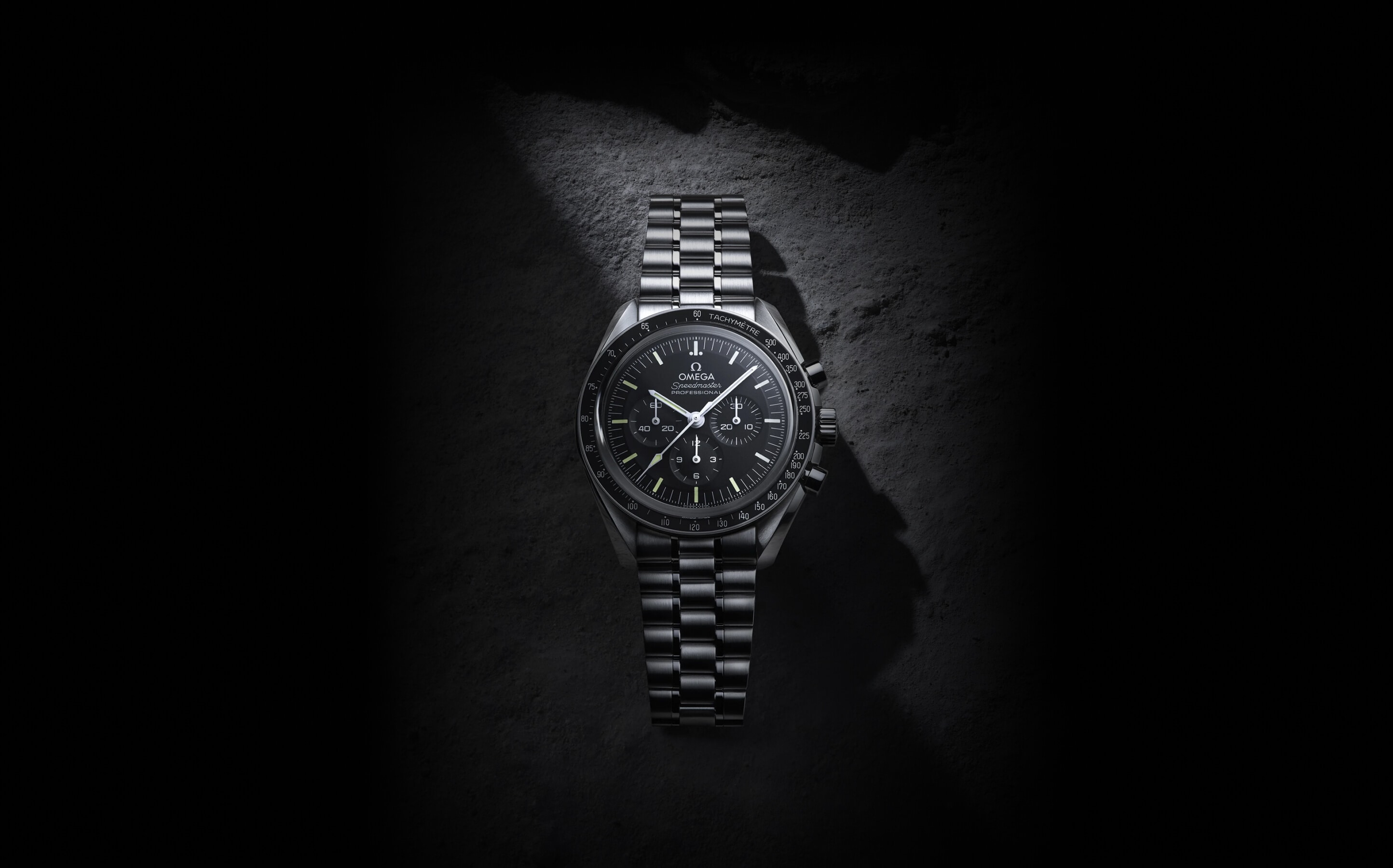
The Omega Speedmaster Professional is the only watch certified by NASA for spaceflight, having passed the agency's qualification testing in 1965. During the actual Apollo 13 mission in April 1970, the command module's onboard timing systems were compromised after the oxygen tank explosion. The crew used a Speedmaster to time a 14-second engine burn that was critical to the course correction needed to bring the spacecraft home.
Ron Howard's 1995 film Apollo 13 dramatized this scene and brought the watch's role to a far wider audience than the original mission's news coverage ever reached. Omega has produced multiple anniversary editions tied to the mission in the years since, and the "moonwatch" identity remains anchored in that real event rather than in the film itself.
James Bond, From Rolex to Omega
For the first three decades of the Bond franchise, from Dr. No in 1962 through Licence to Kill in 1989, the character wore primarily Rolex Submariners. The reference 6538, with no crown guards, is the piece most closely associated with Sean Connery's early appearances. Beginning with GoldenEye in 1995, Pierce Brosnan's Bond wore an Omega Seamaster Quartz Professional reference 2541.80, a choice made by costume designer Lindy Hemming. Omega has been the Bond watch ever since, across actors and creative teams. The partnership is among the longest-running and most commercially successful in cinema.
Pulp Fiction and the Captain Koons Watch
Quentin Tarantino's Pulp Fiction (1994) contains a monologue delivered by Christopher Walken as Captain Koons, in which a gold wristwatch is described as having survived a Vietnam prisoner-of-war camp through highly uncomfortable concealment. The watch shown in the scene is a vintage gold wristwatch attributed to Lancet, sometimes spelled Lancett. The sequence is one of the most-quoted watch moments in film, and it brought a particular kind of unassuming vintage gold dress watch into the cultural conversation.
Steve McQueen and the Heuer Monaco
Steve McQueen wore a Heuer Monaco reference 1133B during the 1971 film Le Mans, a feature built around the 24 Hours of Le Mans race. The Monaco was already an unusual piece in the early 1970s. It used a square case and was powered by the calibre 11, an automatic chronograph movement. McQueen's choice cemented the Monaco's identity as a racing watch and reinforced Heuer's association with motorsport. Tag Heuer, the brand's modern incarnation, has produced multiple anniversary editions referencing the connection in the decades since.
Hamilton and Christopher Nolan
Hamilton has appeared in several Christopher Nolan films, most notably Interstellar (2014), in which the second hand of a Hamilton Khaki is central to the Murphy plot device, and Tenet (2020). The Hamilton-Nolan partnership stands as a more thoughtful example of product placement, with the watches serving narrative purposes rather than acting as bare brand visibility. The technical functions of a wristwatch, second hands, chronograph timing, and the simple act of marking a moment, fit naturally into Nolan's interest in time as subject matter.
Why These Pairings Endure
The watch-on-screen connection is older than the modern franchise system and predates the explicit sponsorship deals that now shape much of the industry. The most enduring examples are the ones where the watch genuinely belongs to the moment. The Speedmaster appears on Apollo 13 because it had to work. The Monaco appears in Le Mans because McQueen actually wore one to drive. The Captain Koons gold watch holds the scene together because the entire scene was built around it.
Even the Bremont Star Wars collection from 2019 fits that pattern in its own register, a real watchmaker building real chronographs around fictional iconography. May 4 is a useful day to remember that the watch on the wrist is rarely accidental.
Sponsored
More News
Watch Service in 2026: Realistic Timelines for the Major Manufactures
Service is the cost of ownership most new collectors underestimate. A practical guide to realistic service timelines and costs at Rolex, Tudor, Omega, Patek Philippe, Audemars Piguet, A. Lange & Söhne, JLC, and IWC, plus the authorized vs independent watchmaker tradeoff.
May 6, 2026
Richemont FY 2026 Preview: What to Watch When the Watch Division Reports
Richemont reports its full-year FY 2026 results in mid-May, covering the year that ended March 31, 2026. The mid-May report is one of the cleanest single reads of the year on European luxury watchmaking, and the commentary will set the tone for the second half of 2026.
May 6, 2026
How to Buy at a Geneva Watch Auction: A Primer for New Collectors
A practical walkthrough of the Geneva spring auction process at Phillips, Sotheby's, and Christie's — from catalog research and condition reports through registration, bidding methods, the buyer's premium, and post-sale logistics.
May 4, 2026
Raul Pages: The AHCI Maker Who Won the Louis Vuitton Watch Prize
In 2024, Raul Pages won the inaugural Louis Vuitton Watch Prize for Independent Creatives with his RP1 Régulateur à Détente, a wristwatch that uses a detent escapement rare outside of marine chronometers. His win is now a useful reference point for what AHCI membership actually means in practice.
May 4, 2026