 LoupeLab
Five Trends That Defined Watches and Wonders 2026
With Watches and Wonders 2026 now closed, five clear themes emerged across the show: smaller cases, vintage-inspired designs, moonphase complications, long power reserves, and black-and-white dial palettes.
Opening
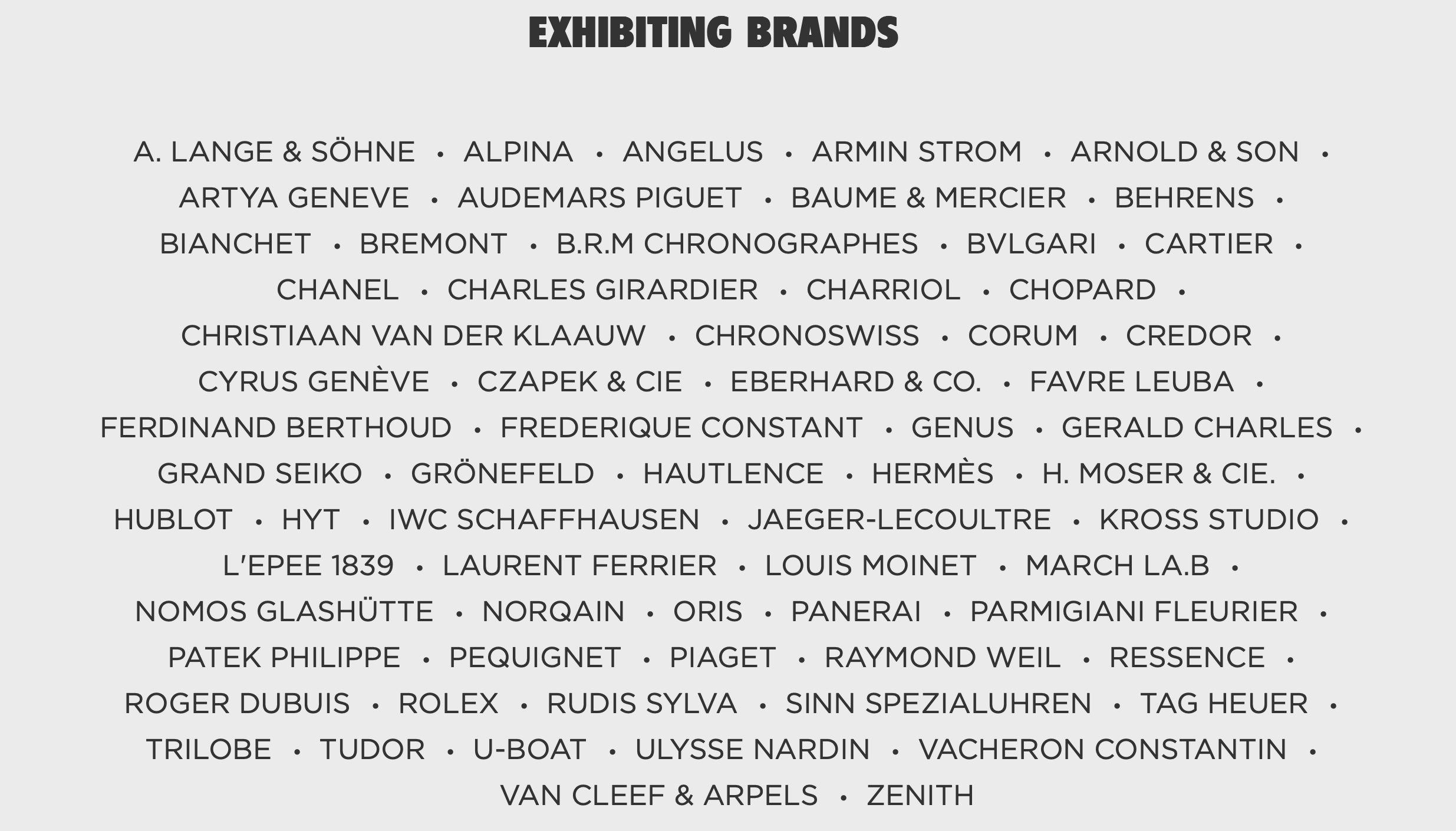
Watches and Wonders 2026 closed on April 20 after one of the more substantive weeks in the show's recent history. Across the 66 participating brands, novelty for its own sake took a back seat to a clearer set of shared priorities. Five themes ran through the releases, appearing not just at one or two maisons but across independents, large groups, and heritage houses alike. Taken together, they suggest an industry recalibrating around restraint, proportion, and traditional complications.
Sponsored

1. Smaller Cases Are Back
The 38mm to 39mm range became the most common new case size across the show floor. Tudor's Black Bay 54 in TUDOR Blue measures 37mm. Patek Philippe's anniversary Nautilus 5610/1P-001 arrives at 38mm, noticeably smaller than the 41mm Jumbo 5810 that has anchored the line in recent years. Vacheron Constantin's Historiques American 1921 returned in 36.5mm and 40mm sizes. Cartier's Santos-Dumont references retained the slim, smaller proportions of the original.
Grand Seiko, Tudor, and a long list of independents pushed 38-40mm as the default rather than 42mm. The post-2010 era of 42-44mm sport watches has ended. The shift toward smaller sizes began around 2020, and 2026 confirms it is now the established baseline rather than a niche preference.
2. Vintage-Inspired Designs
Heritage was the prevailing design language. Rolex's 100 Years Oyster Perpetual mixes Oystersteel with a gold bezel and crown, recalling the two-tone Oyster references of the 1920s. Patek Philippe's Nautilus 50th anniversary returned to a time-only display, which the original 3700 carried at its 1976 launch. Cartier reissued mesh bracelet construction drawn from its bespoke commissions of the 1920s.
Tudor's Black Bay 58 kept its 1958-inspired proportions and gilt accents. Zenith's G.F.J. references its founder Georges Favre-Jacot directly and houses the historic Caliber 135 inside the case. Heritage works as a strategy because the buyer demographic has continued to shift toward collectors who value historical context over novelty.
3. The Moonphase Resurgence
Several brands placed moonphase indications at the center of their headline pieces. Patek Philippe presented a new Celestial "Sunset and Sunrise" grand complication. A number of smaller independents made moonphase their lead complication rather than a secondary detail. Rolex's Cellini Moonphase remains in the catalog as the brand's dress option, and Cartier continues to deploy moonphase variants in its Tank Cintrée and Pasha lines.
The complication has moved from a quiet feature on dress watches to a defining element of skeleton and high-craft references. As brands look for ways to differentiate beyond the chronograph, the moonphase has become the next obvious avenue.
4. Long Power Reserves
Power reserve quietly turned into an arms race. Panerai's Luminor 31 Giorni carries a 31-day power reserve, currently the longest in series production. A. Lange and Sohne's Lange 1 Tourbillon Perpetual Calendar runs 50 hours from the new L225.1 caliber. Rolex's tightened Superlative Chronometer standard now incorporates more rigorous power reserve testing. Tudor's MT5402 sits at 70 hours, a comfortable margin for the BB58 segment.
Many brands moved beyond the 60-72 hour range that defined the previous decade. The practical case for long reserves is straightforward: collectors who rotate watches benefit from a 70-plus hour reserve, since a watch set down on Friday afternoon will still be running on Monday morning.
5. Black-and-White Dial Palettes
After years dominated by green, salmon, and blue dials, monochromatic schemes returned across the show. Rolex's enamel-dial Daytona pairs white grand feu enamel with a grey ceramic bezel. Audemars Piguet's Bleu Nuit Nuage 50 ceramic Royal Oak presents a deep blue that reads almost black under most light. Patek Philippe's anniversary Nautilus references in white gold and platinum stayed within neutral dial territory. Tudor's centenary Black Bay Ceramic is fully blacked-out, case to bracelet.
The pattern is consistent enough to read as a deliberate reset. Having exhausted the colored-dial cycle, brands appear to be returning to classical schemes as the next point of differentiation.
What These Trends Tell Us
The 2026 collection week was, by the standards of trend pieces, conservative. That conservatism is the story. Smaller cases, archive-driven design, and monochromatic dials together point to an industry leaning into restraint and craft rather than chasing the next color or oversized statement. The renewed focus on long power reserves and moonphase complications shows that competition is being fought on traditional horological ground rather than novel materials or smartwatch crossover features.
For collectors, the takeaway is encouraging. Brands are responding to a market that has matured. The watches arriving in boutiques over the next twelve months will, on the whole, be smaller, quieter, and more deliberately tied to the histories of the houses that produce them. That is a healthier baseline than the industry has had in some time.
Sponsored
More News
Watch Service in 2026: Realistic Timelines for the Major Manufactures
Service is the cost of ownership most new collectors underestimate. A practical guide to realistic service timelines and costs at Rolex, Tudor, Omega, Patek Philippe, Audemars Piguet, A. Lange & Söhne, JLC, and IWC, plus the authorized vs independent watchmaker tradeoff.
May 6, 2026
Richemont FY 2026 Preview: What to Watch When the Watch Division Reports
Richemont reports its full-year FY 2026 results in mid-May, covering the year that ended March 31, 2026. The mid-May report is one of the cleanest single reads of the year on European luxury watchmaking, and the commentary will set the tone for the second half of 2026.
May 6, 2026
How to Buy at a Geneva Watch Auction: A Primer for New Collectors
A practical walkthrough of the Geneva spring auction process at Phillips, Sotheby's, and Christie's — from catalog research and condition reports through registration, bidding methods, the buyer's premium, and post-sale logistics.
May 4, 2026
Raul Pages: The AHCI Maker Who Won the Louis Vuitton Watch Prize
In 2024, Raul Pages won the inaugural Louis Vuitton Watch Prize for Independent Creatives with his RP1 Régulateur à Détente, a wristwatch that uses a detent escapement rare outside of marine chronometers. His win is now a useful reference point for what AHCI membership actually means in practice.
May 4, 2026