 LoupeLab
Bremont's New Space Pillar: The Supernova Chronograph Heading to the Moon
Bremont added a fourth pillar to its Land, Sea, and Air collections at Watches and Wonders 2026 with the Supernova Chronograph, one of which will travel to the moon aboard Astrobotic's Griffin Mission One.
A New Pillar for a Tool Watch Brand
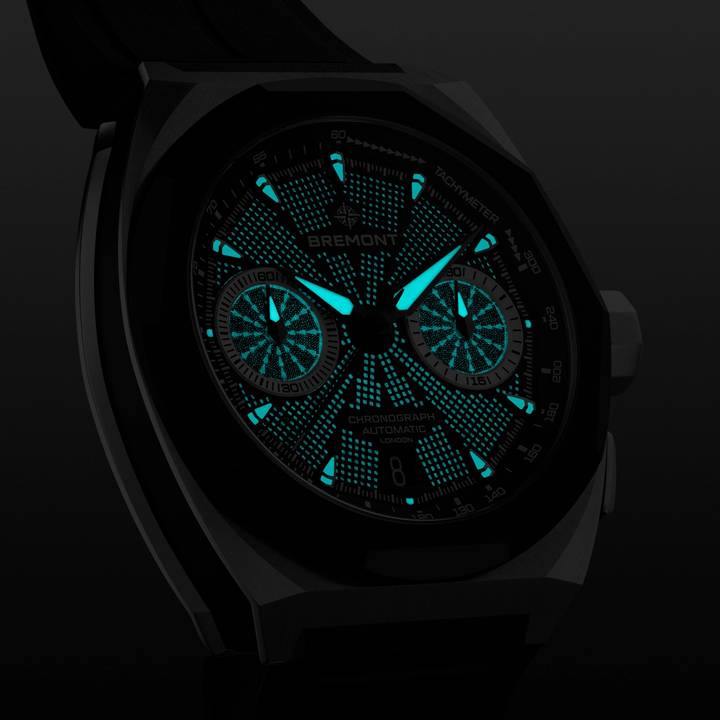
Bremont used Watches and Wonders 2026 to introduce the Supernova Chronograph, the first watch in what the British brand is calling its Space collection. The launch adds a fourth pillar to the existing Land, Sea, and Air categories that have defined Bremont's catalog structure since the brand's founding. One example of the watch is scheduled to travel to the lunar surface later in 2026 aboard Astrobotic's Griffin Mission One, the result of a pre-arranged engineering contract between the two companies rather than a marketing stunt.
The decision to establish Space as a permanent fourth pillar, rather than release a one-off limited edition, marks a substantial strategic shift for the brand.
Sponsored

Bremont's Existing Pillars
Bremont was founded in 2002 by brothers Nick and Giles English. The brand has built its identity around tool watches and partnerships with military units, expedition teams, and aviation organizations. Until this year, the catalog was organized under three pillars.
The Land collection covers terrestrial expedition and military land service, including references such as the Tornado and Argonaut. The Sea collection houses dive watches and naval references, anchored by the Supermarine line and the S500. The Air collection, the brand's signature category, includes the MBII and the Ionbird. Adding a fourth pillar is a meaningful organizational decision, not a one-off product launch.
The Watch Itself
The Supernova Chronograph carries a three-subdial chronograph layout with a rotating bezel. Bremont has designed the case for anti-magnetic and shock-resistant performance, and the dial is configured for legibility in the extreme lighting conditions encountered on the lunar surface. The watch is built to function across the temperature swings, vibration, and radiation environment of spaceflight, including the long thermal cycle of lunar day and night.
Full technical specifications, including final movement designation and pricing, have not yet been released by the brand.
What Goes to the Moon
A single Supernova Chronograph will be carried aboard the Griffin Mission One lander as a payload rather than as a piece of crew equipment. Astrobotic, an American commercial space company, is delivering the lander under NASA's Commercial Lunar Payload Services program. The mission will also deploy NASA's VIPER rover, which is designed to search for water ice at the lunar south pole.
Because Griffin Mission One is uncrewed, the watch will not be worn by an astronaut. It will instead function as a long-duration test of mechanical timekeeping under lunar surface conditions. The data collected will be the first of its kind for Bremont and one of a small number of recorded tests of a mechanical chronograph operating on the moon since the Apollo program.
Why Space Still Matters for Mechanical Watches
Spaceflight is one of the few remaining mission contexts that genuinely justifies a mechanical timing instrument. The most cited example is the Omega Speedmaster, certified by NASA in 1965 and carried on all six Apollo lunar landings. During Apollo 13, the Speedmaster was used to time engine burns after onboard systems were compromised, a use case that effectively demonstrated the value of an analog backup.
Modern aviation no longer requires a wrist-worn mechanical watch for any timing function. Spaceflight, particularly extended-duration missions, still benefits from redundant timing systems that do not depend on electrical power.
A Broader 2026 Pattern
Bremont's announcement does not stand alone. Earlier in the same Watches and Wonders week, IWC unveiled the Pilot's Venturer Vertical Drive, developed in partnership with the commercial space station company VAST. The two announcements suggest that spaceflight has become the new credibility frontier for tool watch brands.
Aviation has largely saturated as a positioning category. Space, by contrast, offers a fresh narrative tied to genuine engineering constraints, including pressurized gloves, vacuum exposure, thermal cycling, and launch vibration. Bremont and IWC have taken different routes into the category. IWC has designed for human use in pressure suits, while Bremont has built a watch intended to ride on an uncrewed lunar lander. Between them, 2026 may be remembered as the year mainstream watchmaking shifted its tool watch identity from aviation toward spaceflight.
Pricing and Availability
Bremont has not yet released pricing for the Supernova Chronograph. The watch is expected to sit in the upper-mid range of the brand's catalog. Initial production tied to the Astrobotic launch will be limited, with a broader rollout of the Space collection expected after the lunar mission concludes.
Closing
The Supernova Chronograph is positioned as the first piece in a long-term collection rather than a commemorative one-off. Whether the watch performs as intended on the lunar surface, and whether Bremont can sustain the credibility this launch is meant to establish, will be answered over the coming year. For now, the brand has placed itself alongside Omega and IWC as one of the few mainstream watchmakers with verifiable spaceflight credentials.
Sponsored
More News
Watch Service in 2026: Realistic Timelines for the Major Manufactures
Service is the cost of ownership most new collectors underestimate. A practical guide to realistic service timelines and costs at Rolex, Tudor, Omega, Patek Philippe, Audemars Piguet, A. Lange & Söhne, JLC, and IWC, plus the authorized vs independent watchmaker tradeoff.
May 6, 2026
Richemont FY 2026 Preview: What to Watch When the Watch Division Reports
Richemont reports its full-year FY 2026 results in mid-May, covering the year that ended March 31, 2026. The mid-May report is one of the cleanest single reads of the year on European luxury watchmaking, and the commentary will set the tone for the second half of 2026.
May 6, 2026
How to Buy at a Geneva Watch Auction: A Primer for New Collectors
A practical walkthrough of the Geneva spring auction process at Phillips, Sotheby's, and Christie's — from catalog research and condition reports through registration, bidding methods, the buyer's premium, and post-sale logistics.
May 4, 2026
Raul Pages: The AHCI Maker Who Won the Louis Vuitton Watch Prize
In 2024, Raul Pages won the inaugural Louis Vuitton Watch Prize for Independent Creatives with his RP1 Régulateur à Détente, a wristwatch that uses a detent escapement rare outside of marine chronometers. His win is now a useful reference point for what AHCI membership actually means in practice.
May 4, 2026