 LoupeLab
Watch Service in 2026: Realistic Timelines for the Major Manufactures
Service is the cost of ownership most new collectors underestimate. A practical guide to realistic service timelines and costs at Rolex, Tudor, Omega, Patek Philippe, Audemars Piguet, A. Lange & Söhne, JLC, and IWC, plus the authorized vs independent watchmaker tradeoff.
Why Service Exists
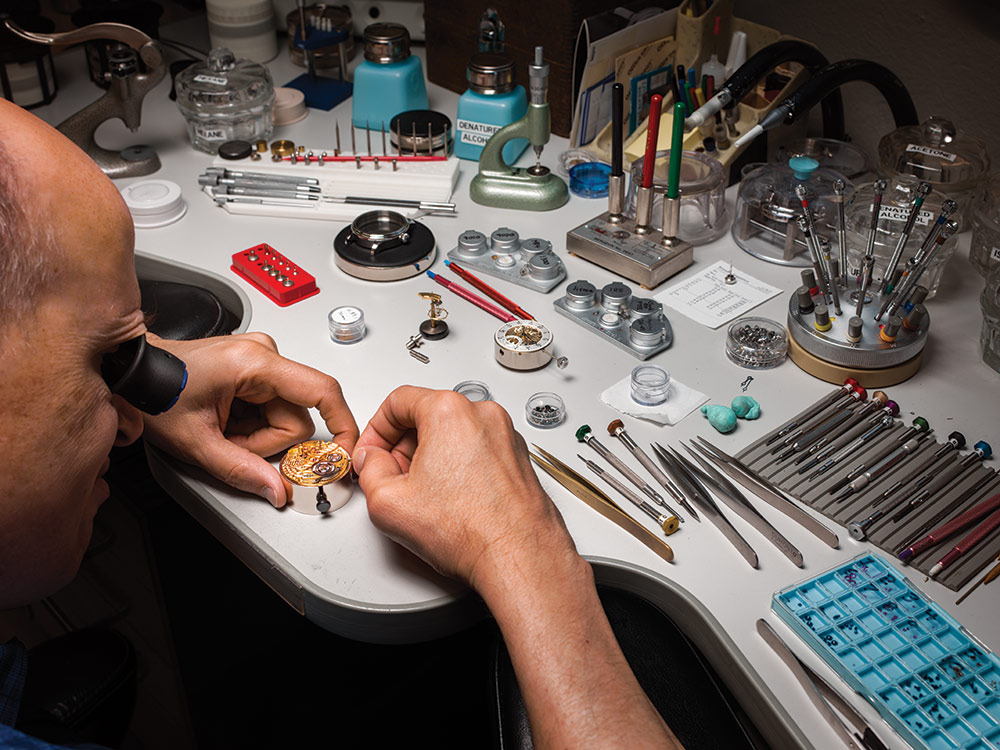
Mechanical and automatic watches require periodic service for reasons that are mechanical rather than cosmetic. Lubricants degrade over time, gaskets dry out and lose their water resistance, and accuracy drifts as components wear against one another. The standard interval for modern Swiss watches sits roughly between 5 and 10 years, though the manufacture's official recommendation tends toward the shorter end of that range. Quartz watches generally need only battery replacement and gasket service for water resistance maintenance, which makes their long-term ownership cost considerably lower than mechanical equivalents.
Understanding why service is necessary helps owners weigh the tradeoff between deferring service to save cost in the short term and risking accelerated wear that produces a more expensive overhaul later.
Sponsored

Minor Service Versus Complete Service
Most manufactures offer two service tiers, and the difference between them matters for both cost and turnaround.
A minor service, sometimes called intermediate or partial, includes cleaning of the case and bracelet, gasket replacement, water resistance testing, regulation of the movement to standard accuracy, and lubricant top-up where accessible without full disassembly. This tier is typically appropriate for a watch under 10 years old that has not previously been serviced. Costs vary by brand but commonly run in the range of 400 to 800 USD for standard automatic Swiss watches.
A complete service, sometimes called full service or overhaul, includes full disassembly of the movement, ultrasonic cleaning of all components, replacement of any worn parts including the mainspring and gaskets, complete relubrication, reassembly, accuracy testing across multiple positions, water resistance certification, and case and bracelet refinishing. This tier is typically appropriate for watches over 10 years old or those with known timing issues. Costs commonly run in the range of 700 to 1,500 USD for standard automatic Swiss watches, with complications such as perpetual calendars and minute repeaters adding several thousand on top.
Realistic Timelines at the Major Manufactures
Service times vary by region, current backlog, and the condition of the piece, so the figures below describe typical experience rather than guarantees.
Rolex service is performed at Rolex Service Centers operated by the brand. Standard turnaround for a Submariner, Datejust, or other catalog model is typically 6 to 12 weeks during normal periods, longer during seasonal peaks. The brand's Lifetime Service Guarantee covers movements serviced at Rolex Service Centers, and the warranty period after service has been extended in recent years.
Tudor service runs through Tudor's network, separate from Rolex. Turnaround tends to fall in a similar range to Rolex but often slightly faster given lower service volume.
Omega service is performed at Swatch Group service centers, with standard turnaround typically in the 4 to 8 week range. Vintage Speedmaster service can run longer due to parts sourcing, particularly for pre-1968 references where original components are no longer in active production.
Patek Philippe service is performed at Patek Philippe service centers, with standard turnaround for modern automatics typically in the 3 to 6 month range. Vintage Pateks and complicated pieces can run 6 months to over a year given the work involved and parts availability.
Audemars Piguet service is performed in Switzerland or at regional service centers depending on the model. Turnaround for modern Royal Oak, Royal Oak Offshore, and Code 11.59 references typically runs 3 to 6 months. Older or complicated pieces take longer.
A. Lange & Söhne service runs through the Glashütte facility for the most part, with regional support in some markets. Turnaround tends to fall in the 4 to 8 month range given the manufacture's lower volume and the level of finishing applied to each piece.
Jaeger-LeCoultre service runs through JLC's Le Sentier manufacture or regional service centers, with turnaround typically 8 to 16 weeks for standard pieces, longer for vintage Reverso references that require case work.
IWC service runs through the Schaffhausen manufacture or regional centers, typically 6 to 12 weeks for standard automatics, longer for the larger pilot complications.
Authorized Service Versus Independent Watchmaker
For modern Swiss watches still under warranty, service through the authorized network is generally the safer choice because it preserves warranty coverage and ensures genuine parts. For vintage pieces, typically those pre-2000, an experienced independent watchmaker can often provide better service for several reasons. Parts availability for very old movements may exceed what the manufacture provides through its standard service program. Vintage timing regulation and dial preservation are areas where specialist knowledge matters more than manufacture access. And cost is generally lower at independents.
The tradeoff is the loss of any manufacture warranty after service, and potential resale value implications for collectors who prefer factory service history on the documentation chain.
Modern Parts Availability
Major Swiss manufactures generally maintain parts availability for movements produced over the past 20 to 25 years. Beyond that horizon, parts sourcing becomes case-by-case and may involve manufacturing replacement parts from scratch or sourcing donor movements. Patek Philippe has a notable parts archive that extends significantly further back, consistent with the brand's emphasis on perpetual serviceability.
Practical Advice for Owners
Budget for service from the day of purchase. Annual cost averaging across the service interval gives a clear sense of true ownership cost rather than treating service as a surprise expense every several years.
For a watch worn on the wrist daily, the standard interval of roughly 5 to 7 years for modern Swiss automatics is appropriate. For a watch in rotation worn only occasionally, the interval can stretch toward the brand's longer recommendation.
Get water resistance tested before any submersion if the watch has not been serviced recently. Gasket failure is the single most common cause of avoidable service damage, and the resulting moisture intrusion can turn a routine service into a movement rebuild.
Keep service receipts and certificates. They document service history and matter for resale value, particularly with collectors who track factory service intervals.
When sending in for service, ask the service center for a written estimate before authorizing work above the minor service tier. Costs can escalate quickly if a part replacement is needed, and a written estimate prevents unwelcome surprises at pickup.
Closing Thought
Service is the cost of ownership that most new collectors underestimate, and it is also the cost that has the largest variance across brands and reference categories. Understanding the realistic timeline and cost before purchase rather than after the warranty expires is one of the few areas where research before buying produces meaningful long-term savings.
Sponsored
More News
Richemont FY 2026 Preview: What to Watch When the Watch Division Reports
Richemont reports its full-year FY 2026 results in mid-May, covering the year that ended March 31, 2026. The mid-May report is one of the cleanest single reads of the year on European luxury watchmaking, and the commentary will set the tone for the second half of 2026.
May 6, 2026
How to Buy at a Geneva Watch Auction: A Primer for New Collectors
A practical walkthrough of the Geneva spring auction process at Phillips, Sotheby's, and Christie's — from catalog research and condition reports through registration, bidding methods, the buyer's premium, and post-sale logistics.
May 4, 2026
Raul Pages: The AHCI Maker Who Won the Louis Vuitton Watch Prize
In 2024, Raul Pages won the inaugural Louis Vuitton Watch Prize for Independent Creatives with his RP1 Régulateur à Détente, a wristwatch that uses a detent escapement rare outside of marine chronometers. His win is now a useful reference point for what AHCI membership actually means in practice.
May 4, 2026
Watches on Screen: A Brief History of Horology in Cinema
May 4 is a useful pretext to look at how watches and cinema have intersected. From Apollo 13's Speedmaster to the Heuer Monaco in Le Mans to the gold Lancet in Pulp Fiction, the watch on a character's wrist is rarely accidental.
May 4, 2026