 LoupeLab
IWC's Pilot's Venturer Vertical Drive: A Watch Built for Spaceflight
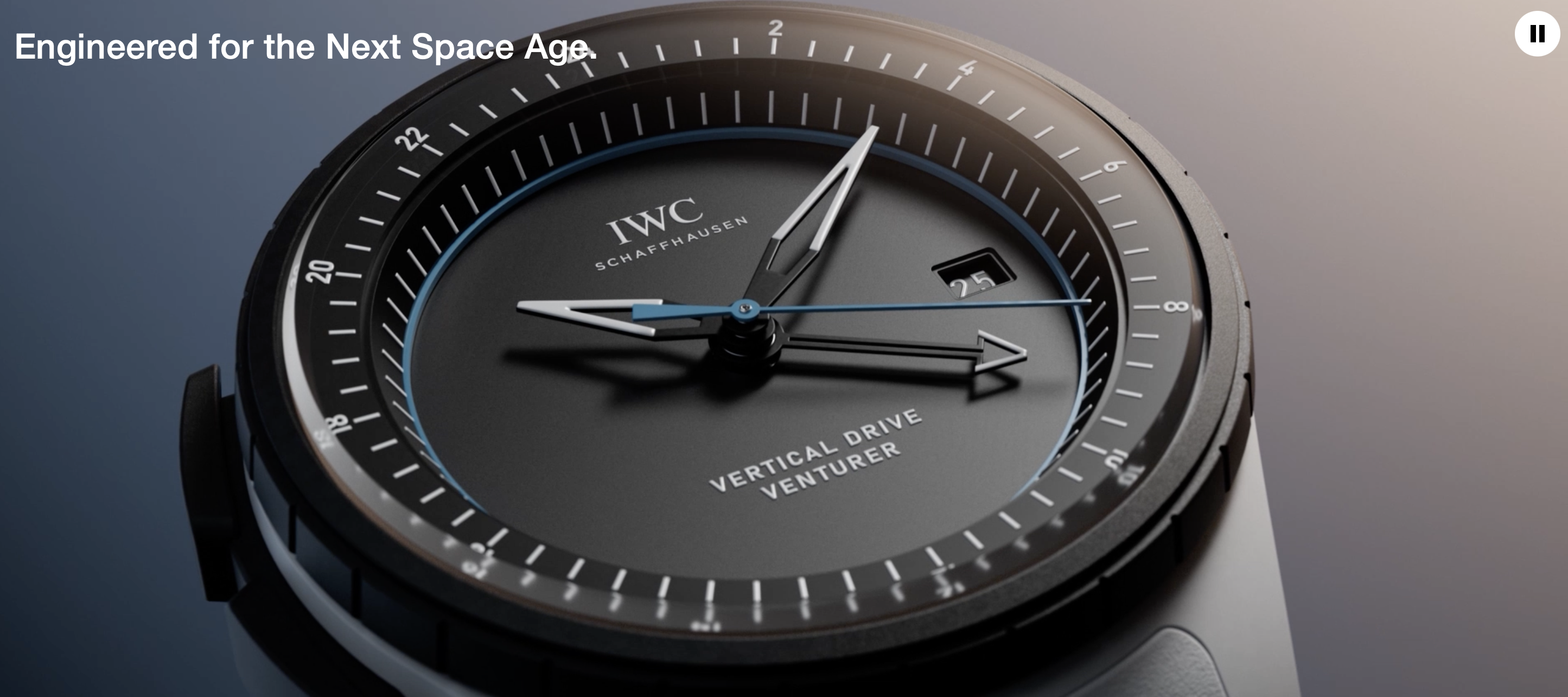
IWC partnered with commercial space station company VAST to develop the Pilot's Venturer Vertical Drive, a Ceratanium watch with a rotating bezel that controls all functions for astronauts wearing pressurized gloves.
IWC Partners with VAST for a Space-Ready Pilot's Watch
IWC Schaffhausen revealed the Pilot's Venturer Vertical Drive at Watches and Wonders Geneva 2026, developed in partnership with VAST, an American commercial space station company. VAST is among the private firms competing to build successor space stations following the planned 2030 retirement of the International Space Station, and the Venturer Vertical Drive is positioned as the timing instrument for its commercial astronaut program.
The collaboration extends beyond sponsorship. IWC and VAST worked together on the engineering brief, with the watch designed to function on the wrist of an astronaut wearing a pressurized space suit. That operational context shapes every decision in the watch, from case material to the control architecture.
Sponsored

The Vertical Drive Bezel System
The defining feature of the Venturer Vertical Drive is a rotating bezel that controls all watch functions. A conventional crown is difficult to manipulate through the thick, pressurized gloves of a space suit, where fine motor control is effectively unavailable. By relocating function control to the bezel, IWC allows an astronaut to set time, change time zones, and operate the watch using gross hand movements alone.
The bezel itself is constructed in Ceratanium, IWC's proprietary material that combines the lightness and corrosion resistance of titanium with the surface hardness of ceramic. Ceratanium begins as a titanium alloy and undergoes a controlled oxidation process at the case level, forming a ceramic outer layer bonded to the titanium substrate. The result is a bezel that resists scratching and holds up to the thermal cycling and abrasive conditions of a space environment.
Dual Time Function
The central hour hand adjusts in one-hour increments in either direction, and the adjustment is performed via bezel rotation rather than a pulled crown. This allows for quick switching between mission time, ground time on Earth, and any additional reference zones the wearer needs to track.
Multiple time references are a practical requirement of space missions. Crews work against Coordinated Universal Time, mission elapsed time, and the time zones of ground control stations, often within the same operational window. A watch that can shift between these references without requiring dexterous crown work becomes a legitimate backup instrument rather than a decorative object.
Why a Watch for Space
Space agencies and private spaceflight operators still specify mechanical timing instruments because spacecraft systems can fail. A wristwatch provides redundancy for critical timing operations that do not depend on onboard electronics or power.
The historical precedent is well established. NASA flight-qualified the Omega Speedmaster in 1965, and it was worn during all six lunar landings. During Apollo 13, the Speedmaster's manual chronograph was used to time engine burns when onboard systems were compromised, which remains the most cited example of a mechanical watch serving a genuine operational role in spaceflight.
IWC brings its own aviation pedigree to the brief. The brand has produced pilot's watches since the 1930s and supplied the Mark 11 to Royal Air Force navigators starting in 1948. The Venturer Vertical Drive extends that lineage from atmospheric aviation into commercial spaceflight.
The VAST Partnership
VAST plans to launch Haven-1, its first commercial space station, in 2025-2026, with a longer-term station called Haven-2 in development. IWC's positioning of the Venturer Vertical Drive as the timing instrument for VAST astronauts frames this as an ongoing engineering collaboration rather than a one-off commemorative piece.
What This Tells Us About Modern Pilot's Watches
The pilot's watch category was defined by World War I and World War II cockpit instruments, when wrist-worn timing was operationally necessary. Modern aviation rarely requires a wristwatch for timekeeping because cockpit instrumentation handles every timing function a pilot needs. Brands have struggled to find a credible new mission for the category.
Spaceflight offers a genuine operational context. Pressurized gloves defeat the crown and pusher controls that have defined pilot's watches for a century, and the bezel-controlled architecture is the real engineering response. It is the first pilot's watch in recent memory designed around a constraint that actually exists in the cockpit of the vehicle it claims to serve.
Specifications and Movement
The watch carries an in-house IWC automatic movement, likely in the Caliber 32000 family. Full case dimensions, reference numbers, and complete specifications were presented at the show, though not every detail has been released publicly. Initial production is tied to the VAST collaboration and is expected to be limited.
Pricing and Availability
IWC has not disclosed full pricing. Given the development costs and the partnership context, the Venturer Vertical Drive sits at the upper end of the IWC Pilot's catalog. Availability will be limited, particularly for early production units.
Closing
The Vertical Drive is engineering done with a clear use case rather than a gesture toward one. The bezel architecture solves the real problem of operating a watch in pressurized gloves, and the Ceratanium construction matches the harshness of the operating environment. Whether commercial astronauts actually wear the watch in orbit remains to be seen, but the engineering brief is more honest than most pilot's watches that claim aviation credentials based on decades-old cockpit precedents.
Sponsored
Related Calibers
More News
Watch Service in 2026: Realistic Timelines for the Major Manufactures
Service is the cost of ownership most new collectors underestimate. A practical guide to realistic service timelines and costs at Rolex, Tudor, Omega, Patek Philippe, Audemars Piguet, A. Lange & Söhne, JLC, and IWC, plus the authorized vs independent watchmaker tradeoff.
May 6, 2026
Richemont FY 2026 Preview: What to Watch When the Watch Division Reports
Richemont reports its full-year FY 2026 results in mid-May, covering the year that ended March 31, 2026. The mid-May report is one of the cleanest single reads of the year on European luxury watchmaking, and the commentary will set the tone for the second half of 2026.
May 6, 2026
How to Buy at a Geneva Watch Auction: A Primer for New Collectors
A practical walkthrough of the Geneva spring auction process at Phillips, Sotheby's, and Christie's — from catalog research and condition reports through registration, bidding methods, the buyer's premium, and post-sale logistics.
May 4, 2026
Raul Pages: The AHCI Maker Who Won the Louis Vuitton Watch Prize
In 2024, Raul Pages won the inaugural Louis Vuitton Watch Prize for Independent Creatives with his RP1 Régulateur à Détente, a wristwatch that uses a detent escapement rare outside of marine chronometers. His win is now a useful reference point for what AHCI membership actually means in practice.
May 4, 2026